
Canadian aerospace is conventionally described as a Montreal and Toronto story, and by employment and assembly volume that description is correct. Alberta has nevertheless been assembling something in the sector, and the province listed aviation among its highest priorities for 2026 alongside health care and technology.
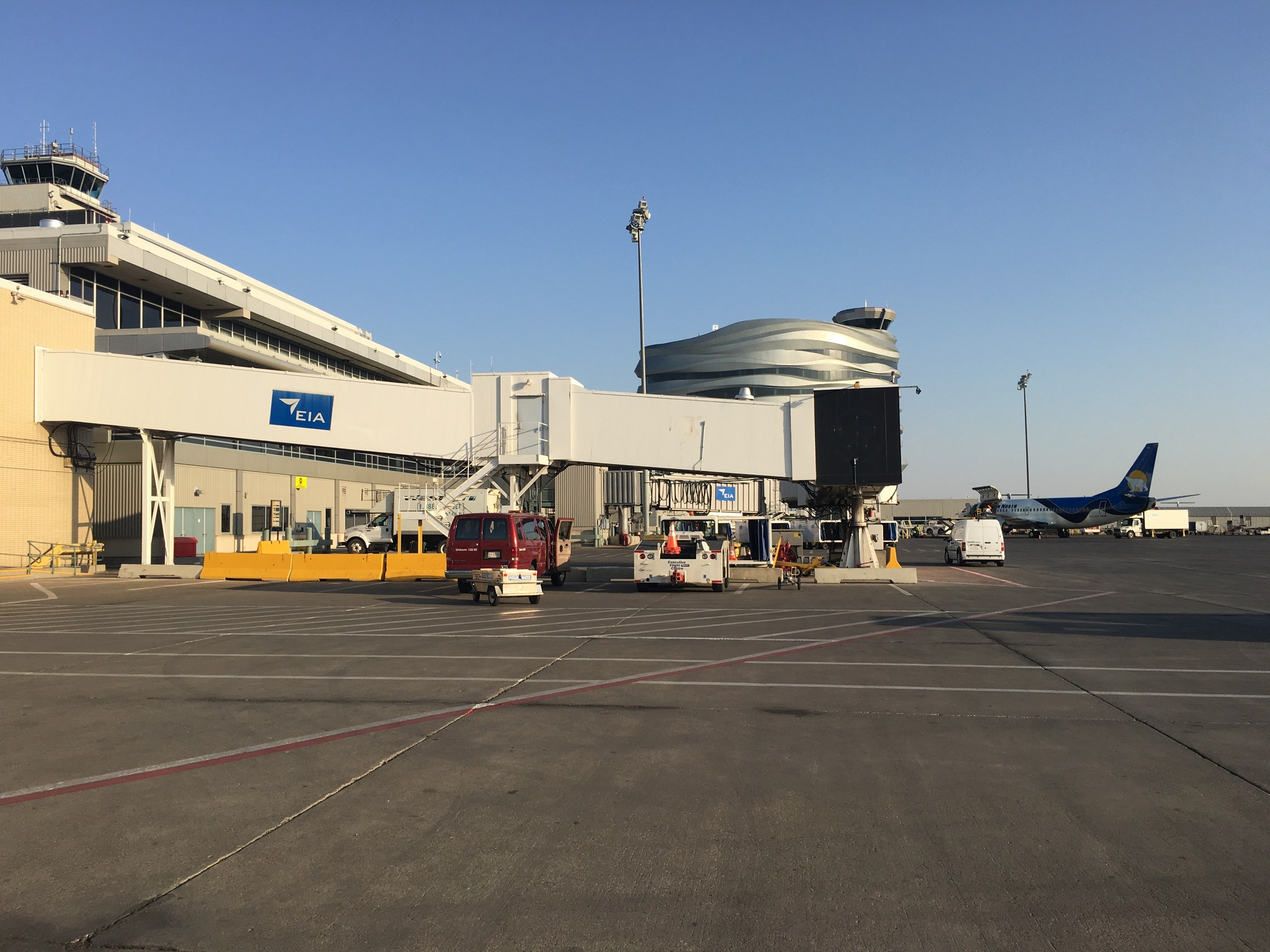
The physical anchor is the Alberta Aerospace and Technology Centre at Edmonton International Airport, which combines aerospace training with a technology centre. Its location is the point. An airport offers what aerospace development most needs and is hardest to arrange: runways, hangars, airspace access, regulatory proximity and room to expand, all in one place, without the encroachment problems that constrain airports inside major cities.
Alberta’s advantages in this sector are real and mostly geographic. The province has large areas of sparsely populated land and correspondingly uncongested airspace, which makes it a practical place to test uncrewed aircraft and beyond-visual-line-of-sight operations that are difficult to authorise near dense population. It has severe winters, which sounds like a disadvantage and is in fact a selling point: cold-weather certification testing has to happen somewhere cold, and operators prefer to test where conditions are reliably harsh.
The industrial base transfers more readily than it might appear. Precision machining, composite fabrication, avionics integration, non-destructive testing and rigorous maintenance documentation are all disciplines the energy sector developed for its own equipment, and they are recognisable aerospace supply chain capabilities. A machine shop holding tolerances for downhole tools is not far from one holding tolerances for aerospace components, and the certification burden, while substantial, is a process problem rather than a capability problem.
Uncrewed systems are where the immediate commercial activity sits, and Alberta’s existing industries supply the demand. Pipeline right-of-way inspection, powerline surveying, agricultural monitoring, wildfire detection and mapping across large remote areas are all operations currently performed by crewed aircraft or ground crews at significant cost. Drone operations covering those tasks have a clear economic case, and Alberta happens to contain a very large amount of exactly that kind of infrastructure spread across exactly that kind of distance.
Defence has entered the picture as a stated priority alongside aerospace and AI sovereignty, reflecting a national shift in procurement posture. Defence work brings long contracts and stable funding, and it brings security clearance requirements, domestic content rules and procurement cycles measured in years. Firms that have only sold commercially find that transition demanding, and the ones that manage it usually do so by partnering with an established prime rather than bidding alone.
The province’s immigration selections have followed the same signal, with recent rounds targeting health care, aviation and technology occupations. That is a slower instrument than capital investment and arguably a more telling one, because it indicates the government believes the constraint is skilled people rather than money.
The honest limitation is that Alberta has no aircraft assembly base and is not going to build one. Final assembly is concentrated, capital-intensive and sticky, and no province wins it by deciding to. The realistic position is components, maintenance repair and overhaul, uncrewed systems, training and specialised testing, which is a supply chain and services role rather than a prime contractor role. That is a perfectly good sector to occupy, and describing it accurately is more useful than pretending to an ambition the province is not pursuing.
What would confirm this is more than an aspiration: aerospace firms establishing operations at or near the Edmonton facility rather than announcing intentions, energy supply chain manufacturers achieving aerospace quality certification, and uncrewed operations receiving approvals for routine beyond-visual-line-of-sight flights over the province’s infrastructure corridors. Those are checkable within a couple of years.
Maintenance, repair and overhaul is the segment where Alberta has the clearest near-term case, and it is worth being specific about why. Aircraft require scheduled heavy maintenance throughout their service lives, that work is labour-intensive and hangar-intensive, and it can be performed anywhere with the facilities, the certified personnel and the regulatory approvals. Operators choose on cost, turnaround time and available capacity rather than on proximity, which means a location with cheaper land and hangar space competes directly with established centres.
Certification is the barrier and the moat simultaneously. Aviation maintenance organisations operate under Transport Canada approvals, and equivalent recognition from other authorities is needed to serve foreign-registered aircraft. Obtaining those approvals is slow, documentation-heavy and expensive, which deters entrants and protects incumbents once they are through it. The same logic applies to component manufacturing, where aerospace quality systems demand traceability far beyond what industrial machining normally requires.
That certification gap is the practical obstacle to converting energy-sector suppliers into aerospace suppliers. The machining capability transfers readily. The quality management system, the material traceability, the documented process control and the audit history do not, and building them takes years and money before a single part is sold. Programmes that help existing manufacturers through that transition would do more for Alberta aerospace than any amount of promotion, because the capability is already here and the paperwork is what stands in the way.
Training is an underrated part of the picture and is where the Edmonton facility may matter most. Aviation faces a global shortage of pilots, maintenance engineers and air traffic personnel, and training capacity is itself an export industry: students travel to where the training is available, and Alberta offers uncongested airspace, a wide range of weather conditions and lower living costs than the alternatives. A training operation also builds the local workforce that everything else in the sector depends on.
Wildfire is the application most specific to this province and the most likely to pull technology forward. Alberta faces a lengthening fire season across vast, sparsely populated terrain, and detection, mapping and suppression coordination are all constrained by how quickly aircraft can survey an area and get information to the people making decisions. Uncrewed systems operating for long periods over remote ground, with sensors that see through smoke and at night, address a problem the province has no choice about solving. Public need of that kind is a reliable driver of capability, and it tends to produce technology that then sells elsewhere.
Sources
- Invest Alberta: aviation and logistics
- Alberta Technology and Innovation Strategy
- Calgary Economic Development: aerospace
- Alberta Innovates: strategic vision
Figures in this article are drawn from the sources above. Spotted an error? Tell us and we will correct it.