
Ask what Alberta makes and almost nobody says medicine. The province’s life sciences sector nevertheless accounts for roughly $2.8 billion in activity across about 410 establishments employing some 6,100 people, and in 2024 it attracted more than $300 million in private-sector investment. That is not a rounding error, and it is substantially larger than the public profile of the sector would suggest.
The research foundation is genuinely strong and measurable rather than asserted. The University of Alberta and the University of Calgary both hold life sciences programmes ranked among the top 150 globally, and the two rank second and third in Canada by number of active clinical trials. Clinical trial capacity is a particularly useful indicator because it is difficult to fake: running trials requires ethics infrastructure, patient recruitment, specialist staff and institutional processes that take years to build and cannot be announced into existence.
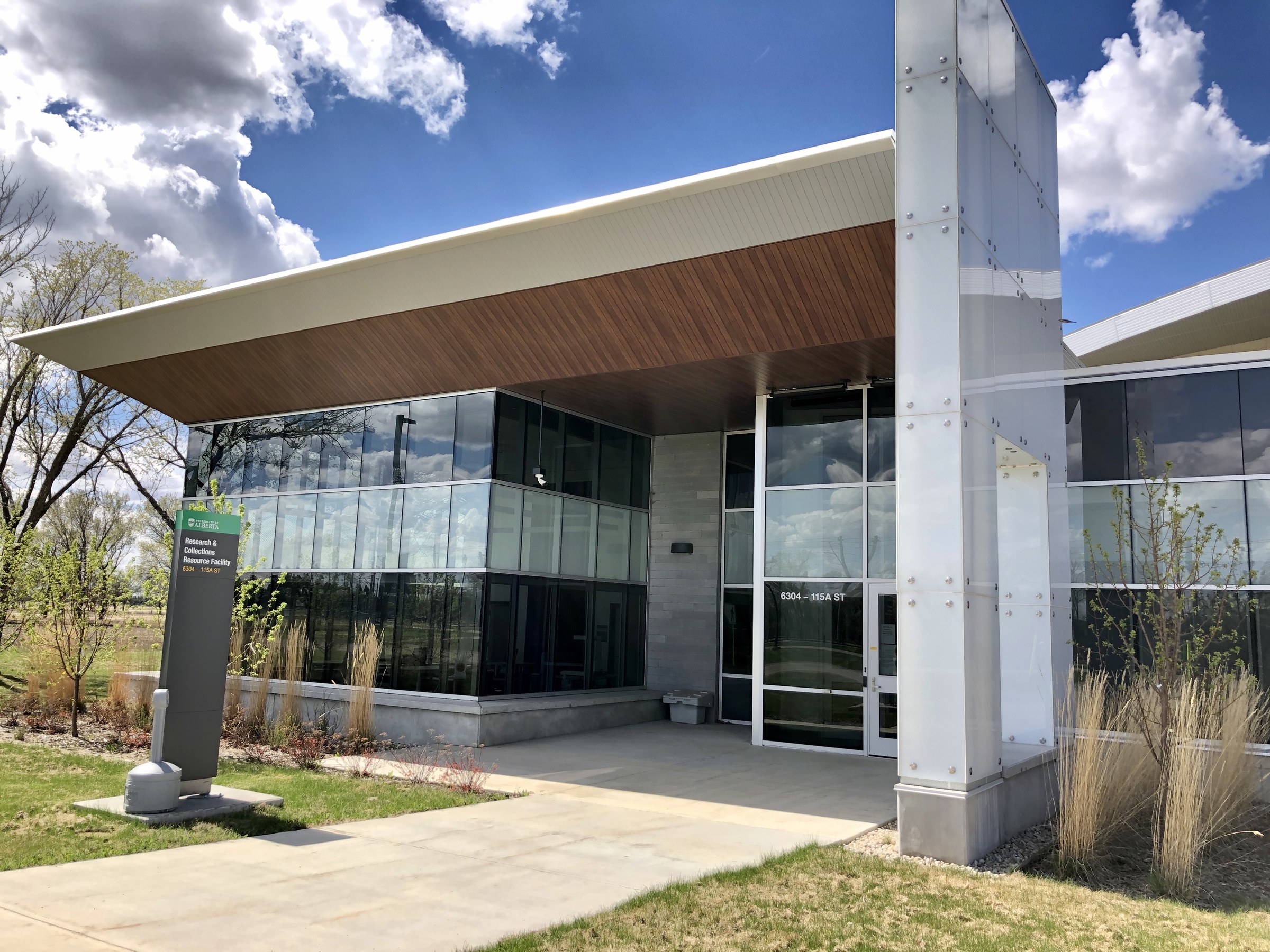
Physical infrastructure has followed. Edmonton hosts the Biotechnology Business Development Centre in Edmonton Research Park, offering wet lab and office space with flexible leasing and shared access to equipment individual startups could not justify buying. That model matters more in biotechnology than in software, because the capital cost of entry is the primary barrier: a founder with an idea for an application needs a laptop, while a founder with an idea for a therapeutic needs a facility, a freezer farm and a regulatory pathway.
Alberta Innovates runs Life Science Fellowships combining up to $200,000 in non-repayable funding with training and infrastructure access, including a stipend structure aimed at keeping researchers in the province during the fragile period when a discovery might become a company. Calgary has seen dedicated early-stage capital emerge, including One Six 8 Ventures, a seed fund focused on early-stage medical technology.
Future Fields, in Edmonton, illustrates what the sector can produce when the pieces line up. The company engineers fruit flies to manufacture recombinant proteins, targeting the growth factors that dominate the cost of cell culture, and has taken that platform from research through validation to shipping product to more than 60 companies. It is a genuinely novel manufacturing approach rather than an incremental improvement, and it came out of a city better known for oil sands engineering.
The structural weakness is the same one that constrains the rest of Canadian life sciences, and it appears at a specific stage. Early research funding is comparatively available through provincial agencies, federal programmes and university commercialisation offices. Later-stage capital, the tens of millions required to run clinical trials through the phases that determine whether a therapeutic reaches market, is not. Companies reaching that point typically raise from American investors, and American investors frequently want the company nearer to them.
This produces a pattern the sector has watched repeatedly: research is funded publicly in Canada, the resulting intellectual property is developed by a Canadian company, and the value is captured after the company relocates or is acquired. The research investment was not wasted, because the knowledge and the training are real, but the returns land somewhere else. Any serious attempt to build a durable life sciences sector in Alberta has to address the capital gap at that specific stage rather than adding more early-stage programmes.
Timelines are the other thing readers should hold in mind when assessing this sector against the province’s other technology bets. A data centre is built in three to five years. A therapeutic takes ten to fifteen from discovery to market, with a high probability of failure at every stage, and the failures are expensive. Judging life sciences on the cadence that suits AI infrastructure produces the wrong conclusion at every checkpoint, and it is the most common error in coverage of the field.
What is worth watching is narrower than announced investment totals. How many Alberta life sciences companies raise a later-stage round while keeping their headquarters here. Whether the clinical trial capacity translates into companies that run their own trials rather than hosting trials for others. And whether the shared-facility model in Edmonton and the emerging seed funds in Calgary produce a second generation of companies founded by people who worked at the first.
There is a further asset the province tends to undervalue, which is its health data. Alberta operates one of the more integrated provincial health systems in the country, with laboratory, imaging, prescription and administrative records held under a single provincial umbrella rather than scattered across competing regional authorities. For clinical research and for health technology development that integration is genuinely rare, and jurisdictions with far larger life sciences sectors do not have it.
Realising any value from that requires governance most provinces have not solved. Access has to be controlled, patient privacy protected, consent respected, and the terms on which a private company may work with public health data set out clearly enough that neither researchers nor citizens are guessing. Get that framework right and Alberta has a durable advantage in clinical research and health artificial intelligence. Get it wrong in either direction, too permissive or too restrictive, and the asset produces either a scandal or nothing at all.
The talent pipeline is the other structural question. The two universities produce well-trained graduates in biological sciences, biochemistry and biomedical engineering every year, and historically a large share have left, either for graduate study elsewhere or for jobs in Toronto, Boston and the American west coast. Retention improves only when there are employers, which returns to the same point: the sector needs companies that reach a scale where they hire in numbers, and reaching that scale needs capital that currently is not here.
Regulatory timelines deserve a mention because they shape everything about how these companies are financed. A therapeutic moving through preclinical work, then three phases of clinical trials, then regulatory review, is committing to a decade or more with a high probability of failure at each stage and costs rising as it progresses. Medical devices and diagnostics move faster but still measure approval in years. Any investor in this sector is underwriting a long, illiquid, binary position, which is precisely why the specialist funds that do it are concentrated in a handful of cities worldwide.
The pragmatic route for Alberta may therefore be less about therapeutics than about the segments with shorter cycles: diagnostics, medical devices, research tools and biomanufacturing inputs. Future Fields is an instructive case here. It sells into research and industry rather than pursuing a regulated therapeutic, which means revenue years earlier and a capital requirement an Alberta-scale investor base can plausibly meet. Building the sector from that direction, rather than waiting for a blockbuster drug, is the more achievable path.
Sources
- Invest Alberta: life sciences
- Alberta Innovates: Life Science Fellowships
- Edmonton Global: life sciences
- Calgary Economic Development: health and life sciences
- BioAlberta
Figures in this article are drawn from the sources above. Spotted an error? Tell us and we will correct it.