
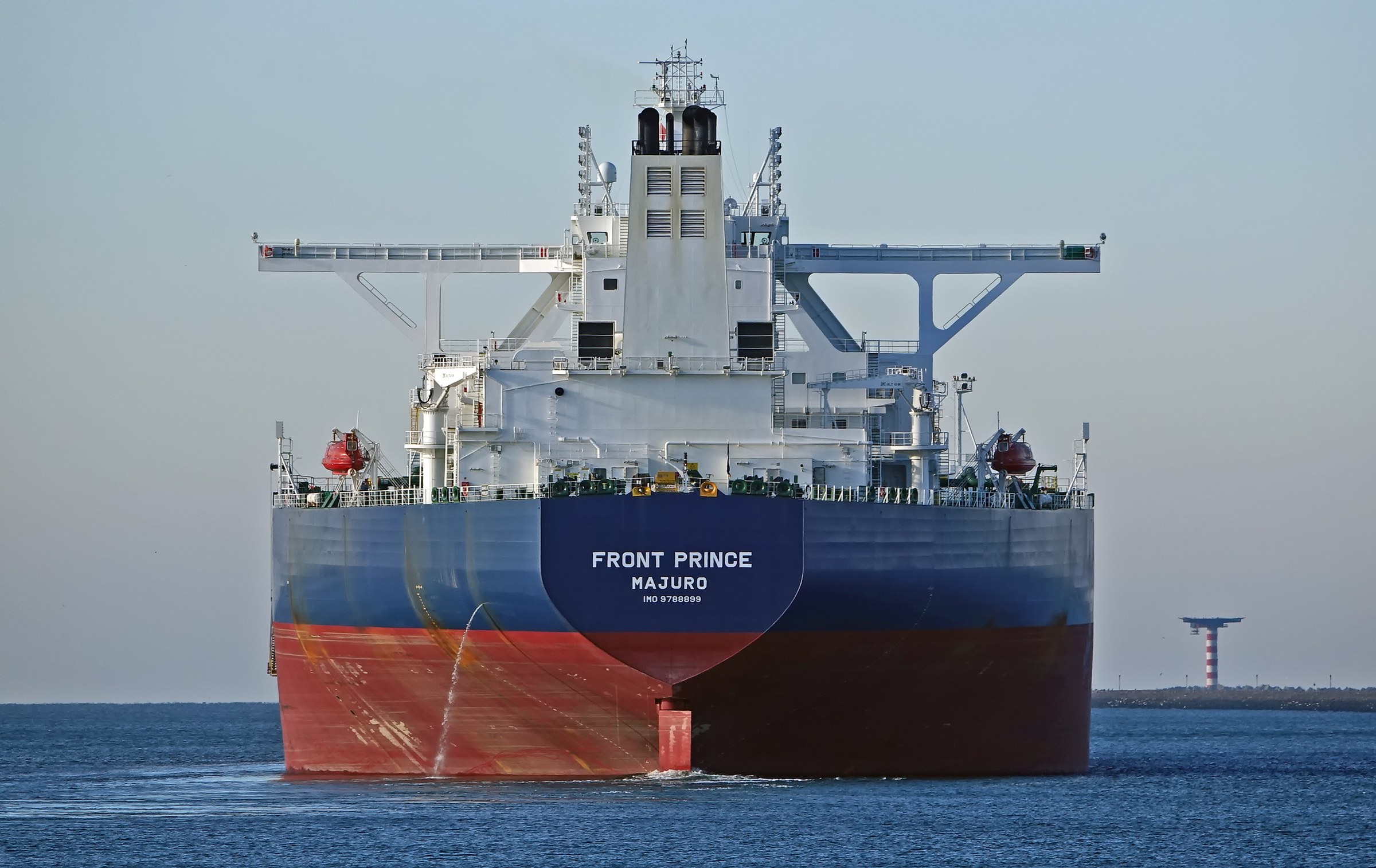
The Strait of Hormuz has been closed since the conflict that began with United States and Israeli strikes on Iran on 28 February, and as of this week it remains closed. Iran's lead negotiator, Mohammad Baqer Qalibaf, has said the waterway will stay shut until Washington meets the conditions of the interim agreement signed in June. President Trump has declined to extend that agreement. Peace talks have stalled, and the oil market has priced the stall.
Roughly a fifth of the world's seaborne crude normally transits that strait. Its closure is therefore not a regional inconvenience but a structural change in global supply routing, and it has held long enough that it can no longer be treated as a spike. Brent traded around $91.07 a barrel this week, its highest since 30 July, with West Texas Intermediate near $84.99, its highest since 31 July. Saudi Aramco has resumed limited loadings through ship-to-ship transfers off Fujairah, but the crossings are reported in single digits, which is a trickle against normal throughput.
The analyst commentary has converged on duration rather than direction. Suvro Sarkar of DBS Bank has said the absence of any agreement will affect price expectations into the fourth quarter and into 2027. Bjarne Schieldrop of SEB has made the blunter structural point that it is within Iran's power to halt the flow through the strait whenever it chooses, which means the risk premium does not disappear when a shipment gets through. Houthi missile activity against vessels in the Red Sea has removed the most obvious alternative routing at the same time.
For Alberta this is, on its face, straightforwardly good. The province produces heavy crude, sells it into a global market, and receives more for it when that market is short. Every producing company in the province is earning more per barrel this month than it planned for, provincial royalties rise with the price, and the fiscal position of a government whose revenue is unusually sensitive to oil improves without anyone doing anything.
The interesting question is not whether Alberta earns more per barrel. It plainly does. The question is whether Alberta can sell more barrels, and that is decided by pipeline capacity rather than by price, which is where the story becomes specific to this province rather than general to oil producers.
The differential is the number to watch, and it has been behaving well. Western Canadian Select has been trading at a discount to WTI of roughly twelve dollars a barrel, with July delivery at Hardisty settling around $12.40 below the benchmark. Set that against $18.65 in 2023 and $14.73 in 2024 and the trend is clear. The Trans Mountain expansion, in service since May 2024, is the reason: additional egress to tidewater gave Canadian barrels somewhere to go other than the American midcontinent, and a producer with an alternative buyer does not have to accept a captive-market discount.
That narrowing is the single most valuable thing that has happened to Alberta's oil economics in a decade, and it is worth being clear about why. The differential is not a quality penalty, or not only one. Heavy sour crude genuinely is worth less than light sweet crude because it costs more to refine, and some portion of the gap is real. The rest was a transport penalty, charged because the barrels had one route and one set of buyers. Build a second route and the transport component compresses.
The constraint now is that the second route is finite. Additional demand from countries seeking non-Middle-Eastern supply cannot be served by barrels that have no way of reaching them, and the current shortage is not a shortage of Canadian oil in the ground. It is a shortage of Canadian oil at a coast. A producer can raise output only to the extent there is space in a pipeline to move it, and space that is already spoken for cannot be conjured by a higher price.
This is where the technology conversation actually sits, and it is less glamorous than the geopolitics. When egress is the binding constraint, the returns move to anything that increases throughput or the value of a barrel already moving. Drag-reducing agents that let more volume through existing line. Blending and diluent optimisation that reduces the condensate needed to make bitumen flow, since every barrel of diluent occupies pipeline space that could carry product. Batch scheduling and quality tracking that reduce interface losses. Partial upgrading, which raises the value of the barrel in the same physical space. None of these produce announcements. All of them matter more, right now, than another expression of interest.
There is also a measurement dimension that has become commercially significant rather than merely regulatory. European buyers looking to replace Middle Eastern supply are operating under carbon border adjustment rules and increasingly ask for verified emissions intensity per barrel. Alberta producers who have invested in measurement, monitoring and verification can answer that question with data. Producers who cannot will find themselves competing on price alone against suppliers who can, which is a poor position in a market that is temporarily short but will not be forever.
The caution worth stating plainly is that windfalls driven by conflict are not a strategy and do not last. The price is high because a waterway is closed, and waterways reopen. When Hormuz reopens, the risk premium unwinds quickly, and Alberta is left with whatever durable capacity it built while the money was good. The province has been through this cycle repeatedly and the pattern is consistent: revenue arrives, and the question of whether it funds capacity or consumption gets answered by default rather than by decision.
There is a version of this period that ends well for Alberta. Elevated prices fund egress and upgrading capacity, and the province emerges with the ability to serve markets it previously could not reach, holding customer relationships formed during a shortage. There is another version in which the money is spent, the strait reopens, and the province is exactly where it was with a better fiscal year behind it. The difference is decided over the next several quarters, and the useful indicators are unromantic: pipeline utilisation, egress projects reaching final investment decision, and whether the differential holds near twelve dollars once the emergency has passed.
Sources
- EnergyNow: oil prices at near three-week high as U.S. and Iran peace hopes fade
- CAPP: understanding the WCS and WTI differential
- Alberta Energy Regulator: Western Canadian Select
- CBC: how the U.S. and Iran conflict is affecting gas prices in Canada
Figures in this article are drawn from the sources above. Spotted an error? Tell us and we will correct it.