
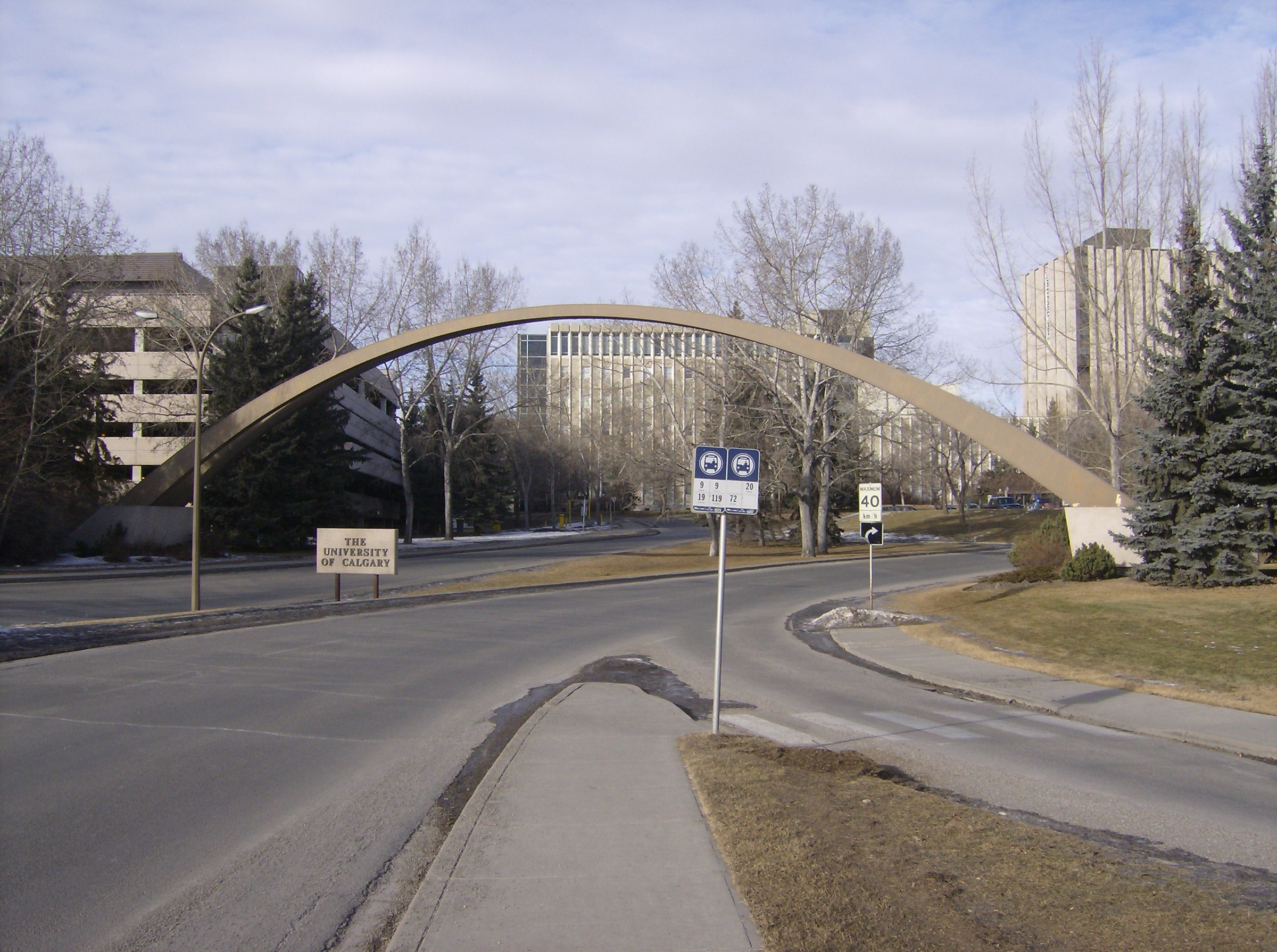
On 6 August the Department of National Defence named a University of Calgary led consortium as the home of Canada’s first Quantum Defence Innovation Secure Hub. The commitment is 20.3 million dollars over two years. The hub sits inside Quantum City, the Calgary quantum initiative, and brings together thirteen organisations: Lockheed Martin Canada, General Dynamics Mission Systems Canada, CAE, Dell Canada and Calian on the industry side, with the University of Saskatchewan, the University of Alberta and the University of Lethbridge as academic partners.
The stated objective is unusually concrete for quantum funding. The hub is to deliver validated prototypes to the Canadian Armed Forces and the Communications Security Establishment within two years, across quantum enabled sensing, communications, computation and hardware assurance. Defence Minister David J. McGuinty framed it as Canada needing to lead rather than follow.
Twenty million dollars is not a large number by the standards of quantum announcements. Alberta committed to quantum as a priority sector in the Alberta Technology and Innovation Strategy 2.0 in April, and Quantum City has been described in hundreds of millions. Read as a funding story this is a modest line item. Read as a procurement story it is something else, and the procurement reading is the more interesting one.
Almost every dollar that has gone into Canadian quantum research has arrived as a grant. A grant funds inquiry. It is judged on publications, graduate students trained, and whether the science advanced. There is no customer, and the absence of a customer is deliberate: basic research that has to justify itself commercially every quarter stops being basic research. This money is different in kind. It comes from a department that operates equipment, it names an end user, and it specifies a deliverable and a date. That is a contract wearing the vocabulary of a research programme.
The word in the middle of the name is doing more work than it appears to. A Secure Hub is not a description of ambition, it is a description of a facility and the rules that govern it. Work performed against Canadian Armed Forces and Communications Security Establishment requirements attracts security classification, personnel screening, controlled goods obligations and export control. Those are ordinary conditions for Lockheed Martin and General Dynamics, whose businesses are built around them. They are not ordinary conditions for a university physics department.
This is where the interesting tension sits, and it has not been much discussed. Academic quantum research runs on open publication and international movement of people. A graduate student’s career is built on papers, and quantum groups everywhere are staffed heavily by international researchers, because the talent pool is global and small. Classified work runs the other way. It restricts what can be published, when, and by whom, and it restricts who can be in the room. Both models are legitimate. They do not combine easily inside one building.
None of the announcement material addresses how the two will coexist, which is not evidence of a problem so much as evidence of a question that has not been asked publicly yet. The practical version of the question is specific: if a doctoral student contributes to a quantum sensing prototype destined for the Communications Security Establishment, can that student publish the result, and if the answer is not for some period, whose thesis absorbs the delay? Universities that host classified work elsewhere have answers to this, generally involving physical and administrative separation between the classified programme and the open one. Building that separation costs money and management attention, and it is not obviously what 20.3 million dollars over two years is sized for.
The talent question follows directly. A hub that can only staff itself from candidates eligible for Canadian security clearance is drawing from a much smaller pool than a university lab. That constraint is the entire point from a national security perspective, since a capability that depends on people who cannot be cleared is not a sovereign capability. It also collides with the recruitment reality of a field where the strongest applicants are frequently not Canadian citizens. Both statements are true at once, and the hub has to operate inside them.
It is worth being clear about what the deliverable actually is. A validated prototype delivered to a defence customer is not a product, a deployed capability or a procurement of scale. It is a demonstration that a technology works well enough for the customer to decide whether to invest further. Most prototypes do not become programmes. The genuine test of this hub is not whether prototypes appear by 2028, because with this consortium and this budget they almost certainly will. It is whether any of them survive into a real procurement afterwards, and nothing in a two year award tells you that.
The sector choice is defensible on the science. Quantum sensing is the nearest to practical use of the quantum technologies, considerably nearer than quantum computing, and its applications are disproportionately defence adjacent: magnetometry, gravimetry, inertial navigation that continues to work when satellite positioning does not. Quantum communications and hardware assurance sit squarely in the Communications Security Establishment’s territory. This is not a research group finding a defence framing for work it wanted to do anyway. The overlap is real.
For Alberta the strategic significance is larger than the cheque. The province’s technology narrative has been energy, then artificial intelligence, then data centres, all of which are capital intensive and cyclical. A defence relationship is neither. Defence customers move slowly, buy for decades, and are largely insulated from the commodity cycle that sets the mood in Calgary. If this hub converts into a sustained relationship it gives the province a technology anchor with a fundamentally different risk profile from everything else it has been building.
The comparison worth holding in mind is the province’s artificial intelligence history. Alberta funded machine learning research at the University of Alberta for years before it was commercially interesting, and that patience produced Amii and a genuine claim to have been early. Quantum City has been described in the same terms, as a bet on a longer clock. A defence contract with a two year deadline is a different instrument entirely, and the honest question is whether it accelerates the long bet or quietly redirects it toward whatever the customer wants demonstrated next.
Both outcomes are plausible and the announcement does not distinguish between them. What can be said now is that Calgary has acquired something Canadian quantum research has mostly lacked, which is a customer with a budget and a deadline, and that the conditions attached to that customer are conditions a university has to build for rather than simply accept.
Sources
- University of Calgary: UCalgary selected to lead nation’s first Quantum Defence Innovation Secure Hub
- Digital Journal: Canada’s first quantum defence hub headed to Calgary
- Government of Alberta: Alberta Technology and Innovation Strategy
- Open Alberta: Alberta technology and innovation strategy 2.0
Figures in this article are drawn from the sources above. Spotted an error? Tell us and we will correct it.