
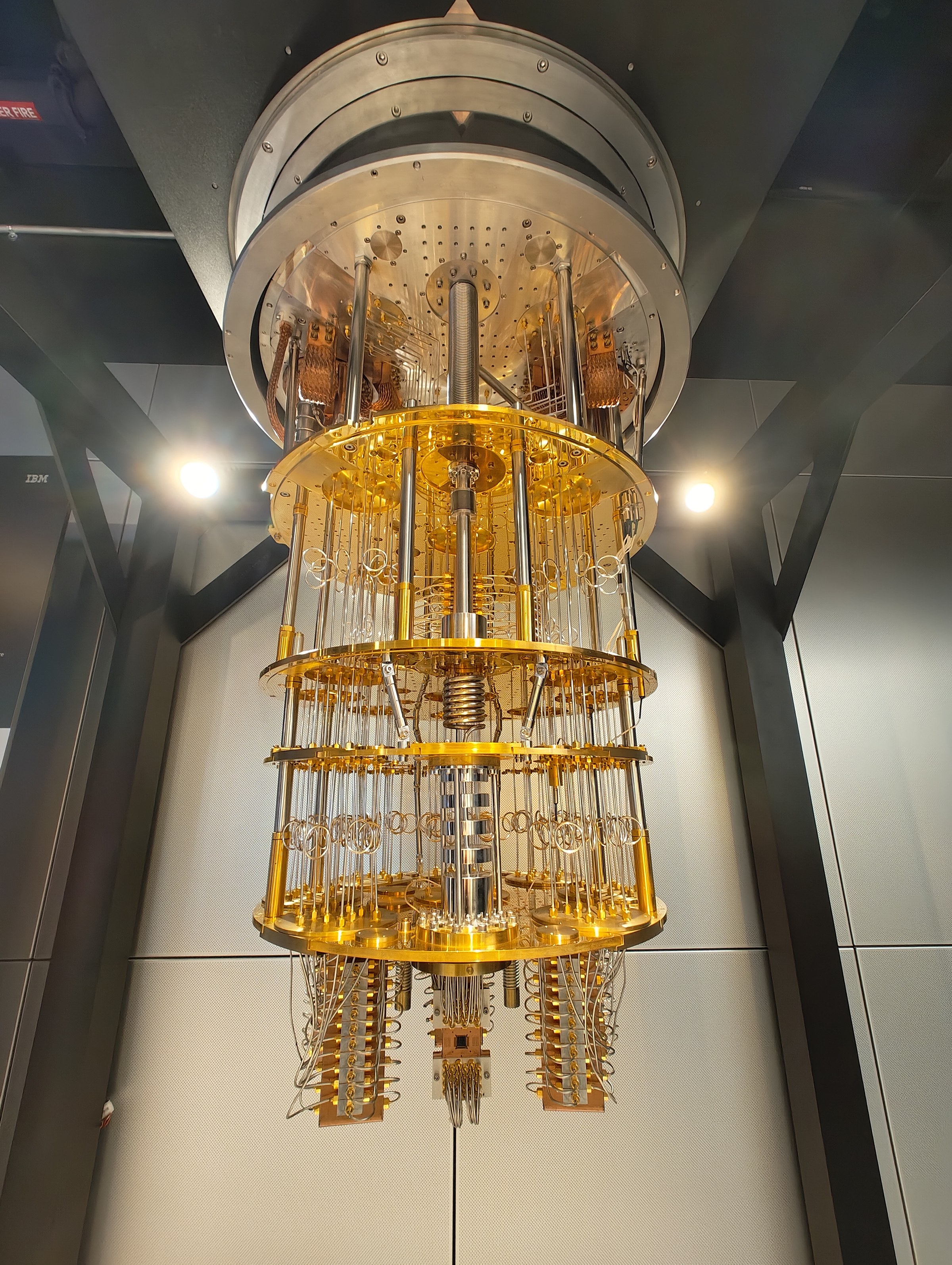
IEEE Quantum Week runs at the Metro Toronto Convention Centre from 13 to 18 September, drawing roughly 2,000 delegates from between 50 and 60 countries. The programme is substantial by any measure: ten keynotes, 48 tutorials, 47 workshops, 22 panels, about 195 posters and 372 technical papers.
The composition of that keynote list is the interesting part. Krysta Svore of Nvidia, Matthias Troyer of Microsoft, Ali Javadi-Abhari of IBM Research, Travis Humble of Oak Ridge National Laboratory, Alán Aspuru-Guzik of the University of Toronto, Christian Weedbrook of Xanadu, Rajeeb Hazra of Quantinuum, Lisa Lambert and Mihir Bhaskar of IonQ, Niels Bultink of Qblox and Gilad Ben-Shach of Quantum Machines.
Read that as a map of an industry rather than a list of names and the structure is clear. Three of the largest technology companies in the world. A United States national laboratory. Pure-play quantum hardware companies pursuing incompatible architectures. Component and control-system suppliers. And a university group. Ten years ago a comparable agenda would have been almost entirely academic, with a vendor or two invited to describe a machine nobody outside a lab had used.
The presence of suppliers is the detail that would be easiest to skip and hardest to fake. Qblox builds control electronics. Quantum Machines builds control systems. A field only develops a component layer when there are enough machines being built by enough different people to sustain one. Specialist suppliers are what an industry looks like from underneath, and their arrival is a more reliable signal of maturity than any qubit count.
The architectural spread across the named companies is the other thing worth noticing, because it is a statement that the field has not converged. IBM and Google pursue superconducting qubits. IonQ and Quantinuum use trapped ions. Xanadu, which is Canadian, works in photonics. QuEra and Pasqal use neutral atoms. Each approach trades differently on coherence time, gate fidelity, connectivity and how plausibly it scales, and no one has demonstrated a decisive advantage. That is genuine uncertainty at the foundational layer of a technology people are already selling.
Hausi Müller of the University of Victoria, who co-founded the conference and chairs it, described its function in terms of the network rather than the results: "You can't know it all yourself. You've got to know people who can help you with your decision-making." He also noted that "everybody feels part of the ecosystem. They are eager to interact and learn from each other." That is a fair description of a field where the hard problems are still shared and the competitive boundaries have not yet hardened.
For Canada the event is a reasonable proxy for a position the country has held for a while and rarely converts. The University of Toronto has one of the stronger quantum research groups anywhere, Aspuru-Guzik's work on quantum chemistry and materials discovery is among the more credible near-term application areas, and Xanadu is a genuine Canadian hardware company competing internationally on an architecture it chose independently. Photonic quantum computing has real advantages, principally that it can operate without the extreme refrigeration superconducting machines require, and real difficulties around generating and detecting single photons reliably.
Alberta has its own position in this, which is worth stating because it is usually left out of Canadian quantum coverage. Quantum City, the Calgary initiative built around the University of Calgary and provincial investment, is a bet on the same technology on a longer timeline than the data centre buildout that dominates the province's technology conversation. It is early, it is small next to Toronto and Waterloo, and it is aimed at a sector where Canada already has standing.
The application everyone points to is chemistry, and it is worth understanding why rather than taking it on faith. Simulating how molecules behave is a problem classical computers handle badly, because the computational cost of tracking quantum interactions grows faster than any classical machine can absorb. A quantum computer models a quantum system natively. If the machines get good enough, drug discovery and materials design stop requiring the approximations they currently depend on. Generative models can already propose candidate molecules; what they cannot do is tell you reliably how one will behave.
The honest caveat is that "if the machines get good enough" is carrying the weight of the entire proposition. Current devices are noisy, error correction consumes enormous numbers of physical qubits to produce a small number of reliable logical ones, and the demonstrations that have claimed advantage have generally been on problems constructed to suit the hardware. Nobody has run a commercially valuable chemistry simulation on a quantum computer that could not be done another way.
Which is why the guest list is the more useful signal than any announcement likely to come out of the week. Nvidia is there because quantum machines need classical computers alongside them and it intends to supply that layer. Microsoft, IBM and AWS are there because they intend to sell access rather than machines. The pure-plays are there because they need customers. That is a set of commercial positions, taken by companies with capital at risk, in a field whose fundamental questions are unresolved. It is not proof the technology will arrive on schedule. It is evidence that a serious number of people who understand it are behaving as though it will.
Sources
- BetaKit: what Quantum Week’s keynote lineup says about the tech in 2026
- IEEE Quantum Week 2026
- Xanadu
- Quantum City, University of Calgary
Figures in this article are drawn from the sources above. Spotted an error? Tell us and we will correct it.