
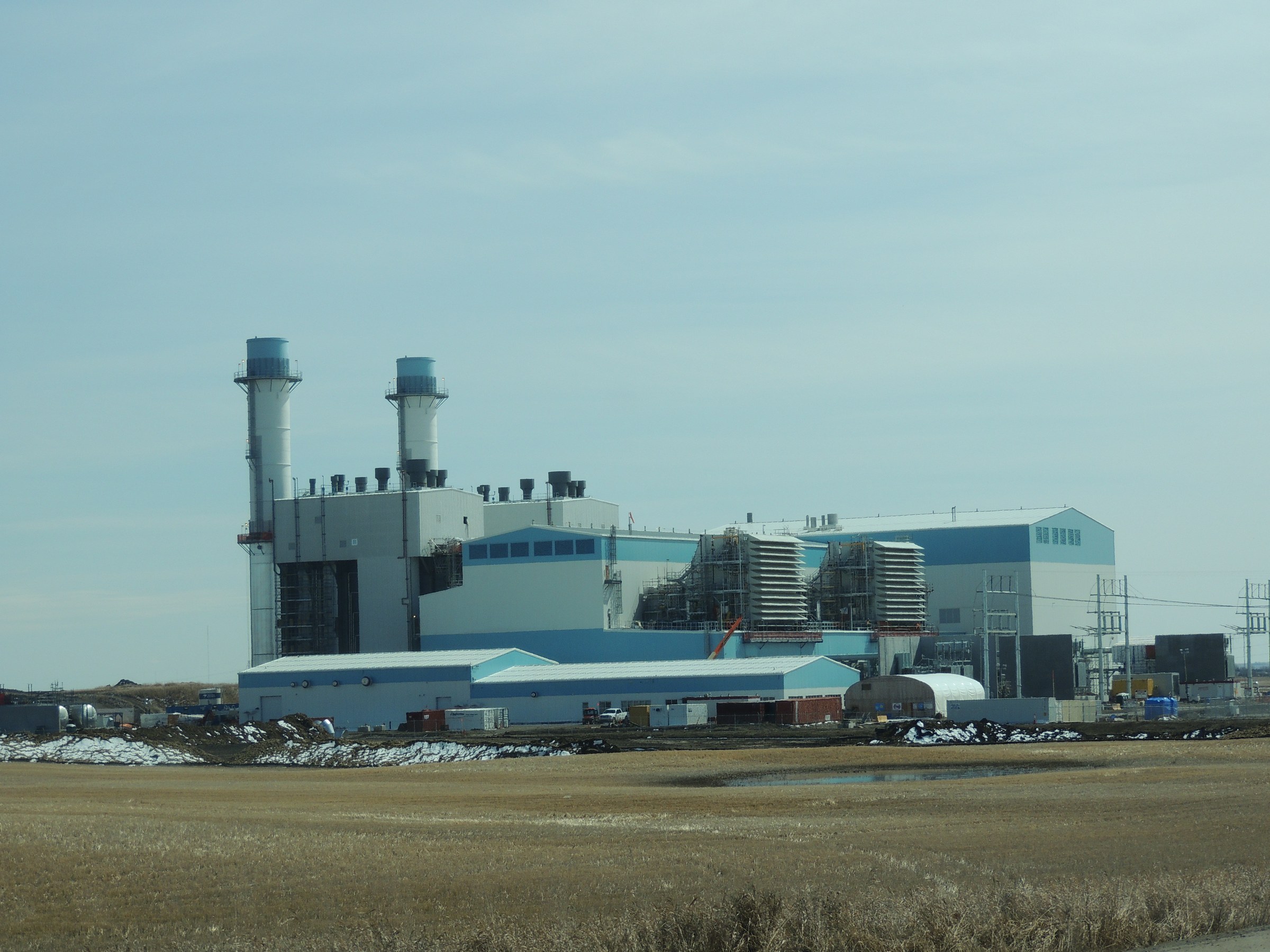
The Municipal District of Greenview, working with entrepreneur Kevin O’Leary, has promoted an AI data centre industrial park near Grande Prairie under the name Wonder Valley, with total investment described in figures that have exceeded $70 billion. Meta’s announced campus in Sturgeon County carries a $13-billion figure.
Announced capital value is a weak indicator. It is typically the sum of everything a site could eventually host if fully built over a period measured in decades, and it is not underwritten by anyone at the time it is published. It is a planning envelope quoted as a commitment.
More informative numbers exist and are usually available. Megawatts of interconnection actually granted is one, because it is issued by the system operator and cannot be inflated. Land secured and rezoned is another. Signed generation contracts, water licences, and the identity of the anchor tenant are all harder to obtain and correspondingly more meaningful.
Each of those has the property that a third party had to agree to it. That is what makes them useful. An announced capital figure requires nobody’s consent and carries no obligation, which is why it can be revised downward without anything formally changing. An interconnection agreement, a rezoning decision, a water licence and a power purchase agreement all involve a counterparty who conducted their own assessment and accepted risk on the outcome. The presence of such a counterparty is close to the only external validation available to a reader who cannot audit the developer’s financial model.
Greenview’s own position illustrates the asymmetry municipalities face. A rural municipal district with a modest administrative capacity is negotiating with sophisticated developers over servicing agreements, tax arrangements and infrastructure obligations that will bind it for decades. The technical and legal resources on each side of that table are not comparable, and the consequences of getting the terms wrong land almost entirely on one side of it. This is not an argument against the projects. It is an argument for reading municipal agreements when they become public, because that is where the actual commitments live.
The distinction matters locally. Communities near proposed sites are being asked to weigh real, immediate effects (water allocation, transmission corridors, construction traffic, tax base, local hiring) against benefit figures that are speculative by construction. The province has launched an information site and a town hall series in response to exactly that gap.
There is a structural reason these figures run so high, and it is not simply promotion. A large industrial park is described as a fully built end state because that is how land is marketed to prospective tenants and how a municipality justifies the zoning and servicing work required to make the site viable at all. The number is doing a legitimate job in that context. The failure happens when it moves from a planning document into a news headline without the timeframe and the conditionality that surrounded it, at which point a thirty-year maximum becomes a present-tense commitment in the reader’s mind.
Alberta has seen this pattern before in a different sector. Announced oil sands capital in the 2006 to 2014 period regularly exceeded what was ultimately deployed, because projects were staged, deferred and in some cases cancelled outright when prices moved. The province retains the institutional memory of that cycle, which is one reason local scepticism about very large announced numbers tends to be better calibrated than the coverage those numbers receive nationally.
The employment figures deserve the same treatment. Construction employment for a project of this kind is real, substantial and temporary, often running for three to five years and then ending. Operating employment for a data centre is a much smaller number, because a modern facility is deliberately designed to run with minimal on-site staff. Both figures are frequently reported without distinguishing between them, which leaves communities with an inflated sense of the permanent employment base a project will support. A useful question at any town hall is not how many jobs, but how many jobs in year six.
None of this means the projects are not real. Alberta has genuine advantages: cool climate that reduces cooling load for much of the year, available land at a fraction of the cost in competing jurisdictions, an existing industrial workforce that already knows how to build large facilities in cold weather, and an energy system capable of adding generation faster than most places. Those advantages are durable and they are why the interest exists. It means the announced dollar figure is the wrong number to track.
A reasonable standard for readers: treat a project as real when it has interconnection, generation and an anchor tenant. Interconnection because the system operator has to say yes and cannot be lobbied into physics. Generation because the regulation now requires it. An anchor tenant because someone has to be buying the compute for the building to have a business behind it. Until all three exist, it is a proposal with a large number attached, and the number is the least reliable part.
Sources
- Government of Alberta: AI data centres information
- Calgary.Tech: Alberta town hall series on AI data centres
- EnergyNow: Alberta’s AI data centre gamble
- MLT Aikins: Alberta announces AI Data Centres Strategy
Figures in this article are drawn from the sources above. Spotted an error? Tell us and we will correct it.